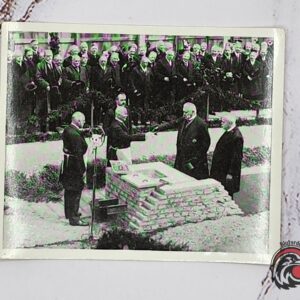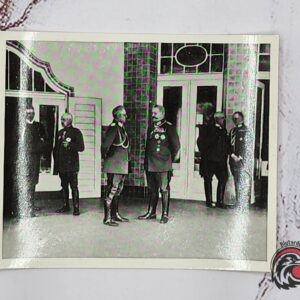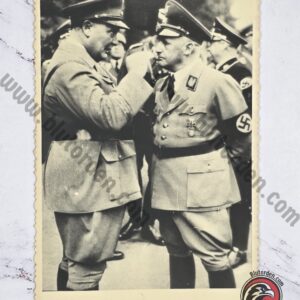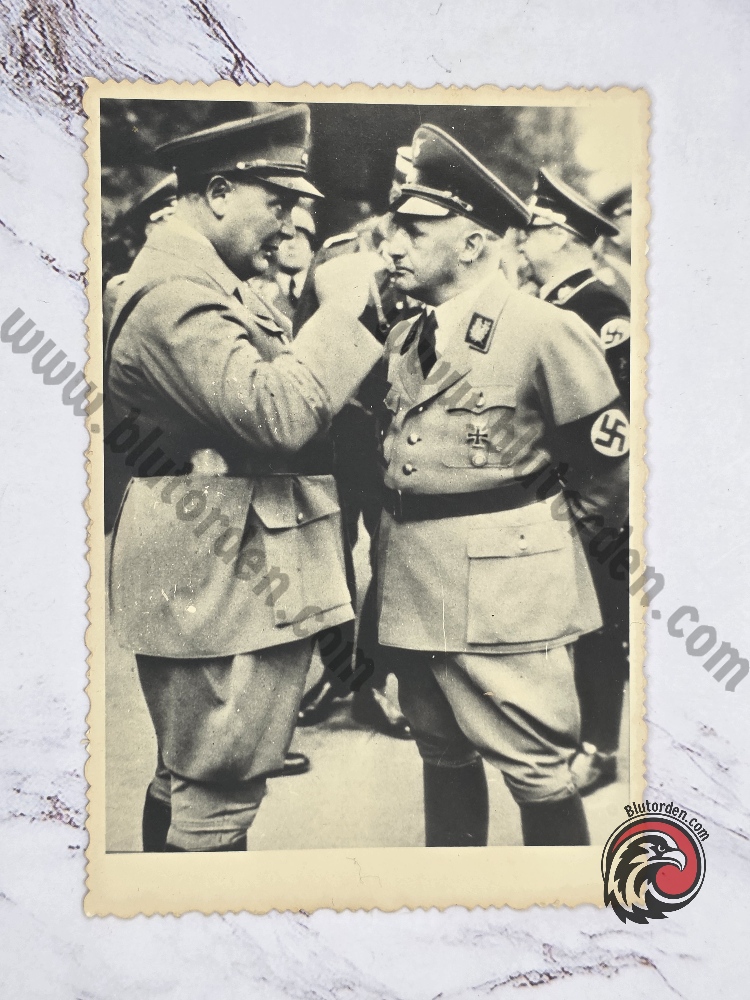
A period photograph depicting Hermann Göring (left) in conversation with an individual believed to be SA Chief Viktor Lutze (right) during an official National Socialist gathering.
The individual on the right wears the characteristic brown uniform of the Sturmabteilung (SA), complete with senior leadership collar insignia, the NSDAP armband, the Iron Cross 1st Class (EK1), and an additional suspended award. Based on the uniform, facial features, and comparison with known period photographs, he is believed to be Viktor Lutze, who succeeded Ernst Röhm as Stabschef der SA on 1 July 1934.
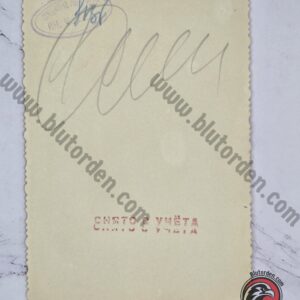
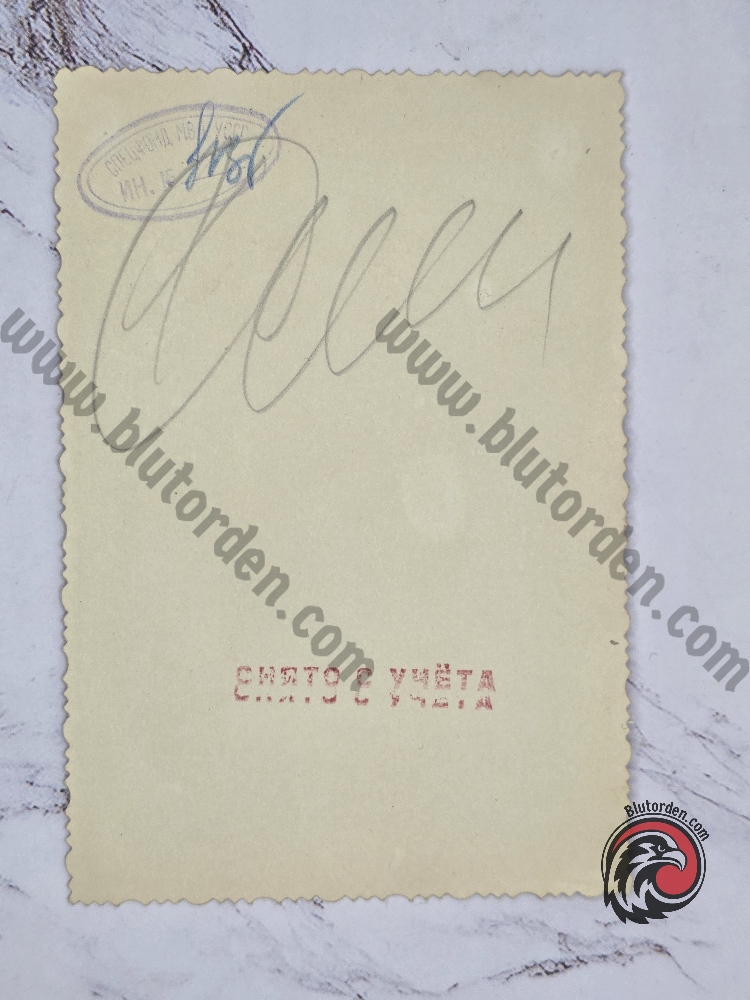
The reverse bears several post-war Soviet archival inventory markings, including administrative cachets and the Russian inscription “СНЯТО С УЧЕТА” (“Removed from Inventory”), indicating that the photograph was once retained within former Soviet archives before later entering the collector market.
Photographs depicting Hermann Göring alongside senior SA leadership are considerably less common than standard propaganda portraits and remain desirable additions to advanced Third Reich photograph collections.
Condition
Very good period condition. Clear image with strong overall detail. Minor age toning and light handling wear consistent with age. Reverse bears Soviet archival inventory markings and handwritten archive notation.
Specifications
Period: Third Reich (1933–1945)
Country: Germany
Organization: NSDAP / SA
Type: Period Photograph
Subjects: Hermann Göring and believed to depict Viktor Lutze
Material: Photographic paper
Photographer: Unknown
Dimensions: 9 × 13 cm
Provenance: Former Soviet archives
Originality: Period photograph bearing post-war Soviet archival inventory markings
Historical Note
Following the Night of the Long Knives in 1934, Viktor Lutze became Stabschef der SA, replacing Ernst Röhm after the purge of the SA leadership. Under Lutze, the organization’s political influence gradually declined as the SS assumed a dominant role within the National Socialist regime. Period photographs believed to depict Lutze with leading figures such as Hermann Göring are sought after by collectors specializing in Third Reich political history.